
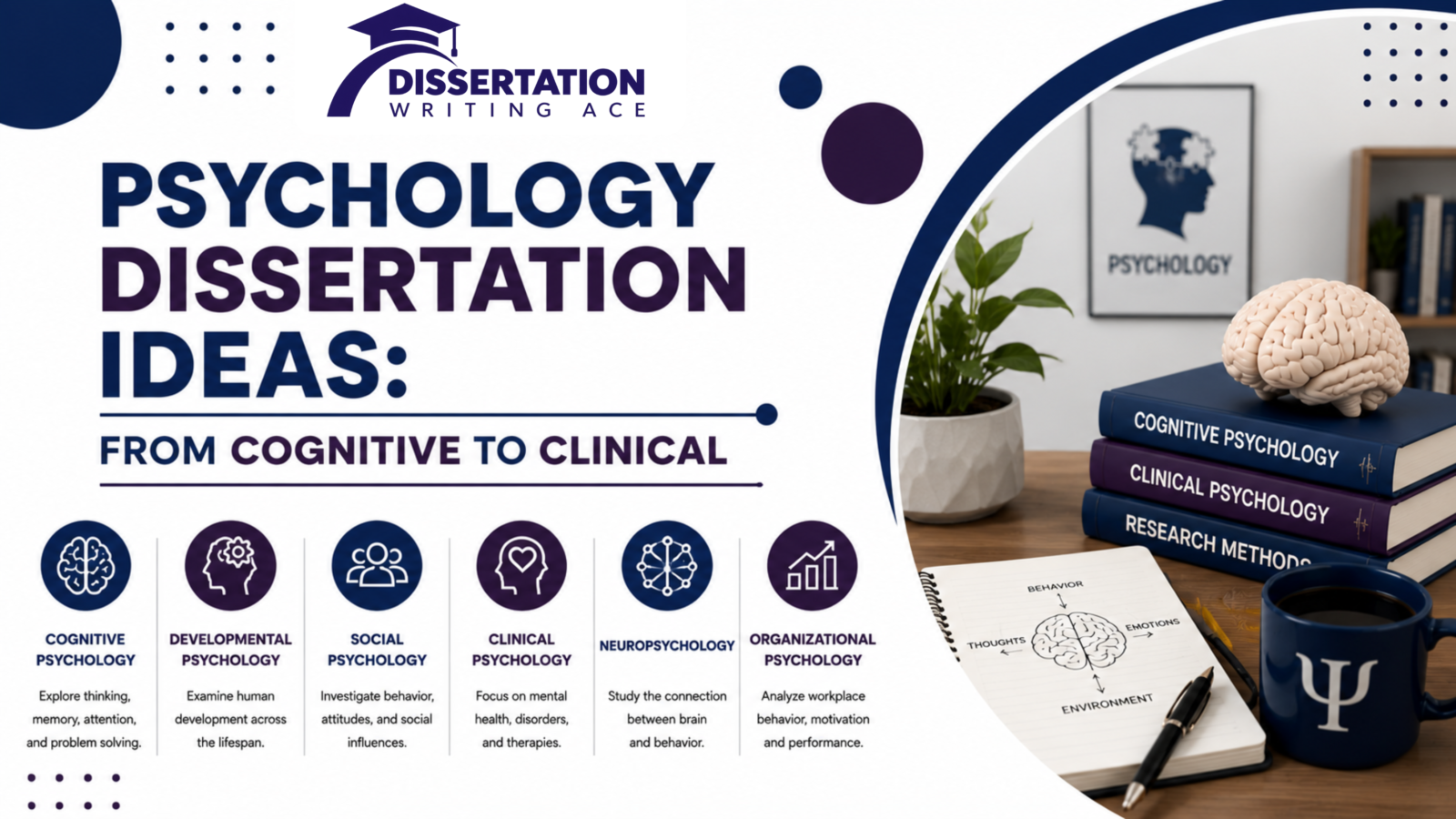
Choosing psychology dissertation topics can become confusing quickly. A single search can generate thoughts regarding memory, anxiety, social media, therapy, cognition, trauma, and other concepts without much supporting description of how they are connected to various fields of psychology. The problem is not a shortage of psychology dissertation topics, but a lack of structure. Students should understand the types of ideas that are appropriate to their course, level of study, methods at hand and areas of research. This guide categorises the psychology dissertation ideas in terms of sub-field, concentrating on cognitive and clinical psychology. It also demonstrates how a generalized locality is narrowed to center on a specific, investigative inquiry instead of replicating it as a pre-existing title.
Why 2026 Is a Rich Year for Psychology Research
Technology, healthcare, and changing digital habits are all influencing the direction of psychology research in 2026. The use of AI-enhanced therapeutic and diagnostic instruments is generating apprehensions about efficacy, reliability, accessibility, and professional standards. Teletherapy and digital mental health services are expanding the availability of psychological assistance, yet social media continues to be a crucial field of study due to its impact on adolescent health, self-worth, focus, and emotional stability. Together, these changes give students plenty of opportunities to explore current psychology research topics for 2026 instead of relying on broad or well-worn questions. Strong topics relate to a contemporary problem in a particular population, psychological variable, environment, or quantifiable phenomenon.
Cognitive Psychology Dissertation Ideas
Cognitive psychology is concerned with decision-making, information processing, reasoning, memory and attention. Strong cognitive psychology dissertation topics should examine a specific mental process in a clear context.
Possible ideas include:
- Cognitive offloading and reliance on AI chatbots for memory/decision tasks.
- Working memory differences between monolingual and bilingual individuals.
- Effects of sleep deprivation on decision-making accuracy.
- Cognitive biases in digital information processing and misinformation judgement.
For example, an AI chatbot study could look at whether frequent use of these tools affects how well students remember information or recall tasks in academic settings. Similarly, a misinformation project could explore whether confirmation bias influences how students judge information they encounter online. The term AI and cognition is too general, and a study that focuses on a single cognitive process, population, and outcome is easier to manage.
Clinical Psychology Dissertation Ideas
Clinical psychology offers numerous research directions, yet not all projects require direct contact with patients or clinical services. Depending on university requirements and ethical approval, students can explore clinical psychology topics through surveys, secondary data, literature reviews, or research involving non-clinical groups.
Relevant ideas include:
- Effectiveness of AI-based CBT platforms for anxiety and depression.
- Teletherapy outcomes compared to face-to-face treatment.
- Trauma-informed care approaches in school or clinical settings.
- Emotional regulation strategies and their impact on treatment outcomes.
These areas can also lead to practical CBT and mental health dissertation topics because they bring established psychological approaches together with newer ways of delivering treatment and support. Some projects might concentrate on interactions between users and AI-based CBT, teletherapy outcomes among a specific population, or the relationship between emotional regulation and treatment results.
From Idea to Research Question: A Worked Example
Turning a broad dissertation idea into a clear research question gives the project a much stronger direction. Contemplate the overarching notion of cognitive reappraisal and its relation to depression. This notion, by itself, fails to specify the participants, the relationship under examination by the researcher, or the methodology for measurement.
A stronger question is:
“Does cognitive reappraisal ability mediate the relationship between life stress and depressive symptom severity in UK adults accessing primary care psychology services?”
This question makes the study much clearer because it identifies the population, the key variables, and the outcome that the researcher can measure. Students pursuing a psychology dissertation topic in the UK can apply the same procedure: first, define the overall field of interest, then the population, then the variables of interest, and finally the relationship or outcome. Only if the idea is too broad, refer to how to narrow a broad research interest into a question.
Choosing the Right Topic for Your Study Level
The same subject area can be approached differently depending on academic level.
| Study Level | Recommended Topic Focus |
| Undergraduate | Survey-based or literature-based designs, such as social media use and self-esteem in the UK teenage population. |
| Master’s | Applied studies with a clear methodology, such as teletherapy effectiveness for university students. |
| PhD | Original theoretical or empirical contribution, such as AI-based diagnostic tools in clinical assessment. |
Feasibility should be at the forefront of undergraduate projects. Psychology dissertation topics for master’s students should normally allow deeper analysis, clearer methodological justification, and stronger engagement with theory. At the PhD stage, the topic should be in support of a new contribution to knowledge.
Frequently Asked Questions
Conclusion
Strong psychology dissertation topics should connect to a genuinely active area within the chosen sub-field rather than remain a broad interest in “psychology.” Cognitive psychology, clinical psychology, digital mental health, and AI-assisted therapy offer many possibilities, but each idea should be narrowed into a specific and realistic research question. If you are still choosing between ideas, review how to choose a dissertation topic you won’t regret before committing to one direction. The guide on how to narrow a broad research interest into a question can also help turn a general theme into a focused study. Students who wish to further narrow a good idea and make it a good proposal can also be provided with subject-specific dissertation support.