
Your proposal is not a summary of your dissertation. It is the document that decides whether your supervisor says yes before you have written a single chapter. Students often treat the proposal as a mere formality to get past. This is a massive mistake.
This document actually determines how smooth or painful the next academic year will be. You must take it seriously. Terminology varies wildly between universities. However, what every department expects converges on the exact same core sections.
This post maps that common structure so you are not caught out by specific department wording. We provide a complete section breakdown and a functional outline to start from. You will learn exactly how to write a dissertation proposal properly. Mastering the correct Dissertation Proposal Structure is the absolute first step to graduation.
What a Dissertation Proposal Actually Needs to Do
It Is a Persuasive Document Not Just a Plan
The proposal must convince a reader that your research is relevant and grounded in the literature. It also needs to prove your study is feasible and methodologically sound. Every successful proposal must establish four distinct things.
- Academic relevance to current debates.
- Subject context and theoretical grounding.
- Clear research approach and methodology.
- Logistical project feasibility.
You are presenting a persuasive argument rather than a simple schedule. Using a highly reliable research proposal structure makes this persuasion much easier.
You Are Not Bound by It
Proposals always evolve as the year progresses. Supervisors completely expect some drift as your reading deepens. Your methods will also get refined over time.
Over perfecting the initial document wastes precious time. That time is much better spent actually starting your reading. If you are stuck at the very beginning, learn how to choose a dissertation topic to get moving. Reviewing a good dissertation proposal example UK format will also reduce your initial writing anxiety.
The Core Sections Every Proposal Needs
Title
Your title should be highly specific rather than just a broad topic label. You can expect it to evolve slightly as the overall project develops.
Background and Rationale
This section sets out why the research question matters right now. It shows how your idea connects to current debates in the field. This is where you establish a strong research rationale for your academic readers. We have a full guide on how to write a research rationale that convinces your supervisor if you need extra help.
Aims and Objectives
Your aims and objectives dissertation section outlines your exact path. The aim is the single overarching goal. The objectives are the smaller measurable steps that get you there. Objectives should always be phrased as a clear chronological process.
Mini Literature Review
This is a heavily condensed version of your eventual main chapter. It is not exhaustive at all. It exists purely to show the literature gap proposal readers need to see. You typically write three to five sentences of clear gap identification here.
Methodology
This section states your exact research approach and specific data collection methods. Every choice needs a clear methodology justification tied back to the research objectives.
Timeline or Plan of Work
You must realistically account for your literature research and drafting stages. A detailed Gantt chart dissertation timeline is highly recommended here to visualize your workflow accurately.
Ethical Considerations
You must flag any ethics approval proposal needs very early. This is especially relevant for topics involving human participants or highly sensitive data sets.
Expected Outcomes and Significance
This part states what the research explicitly hopes to demonstrate. It outlines how the findings will fill the identified academic gap.
Reference List
Include all sources cited in the proposal. Format them in the required citation style for your exact department.
Sample Proposal Outline
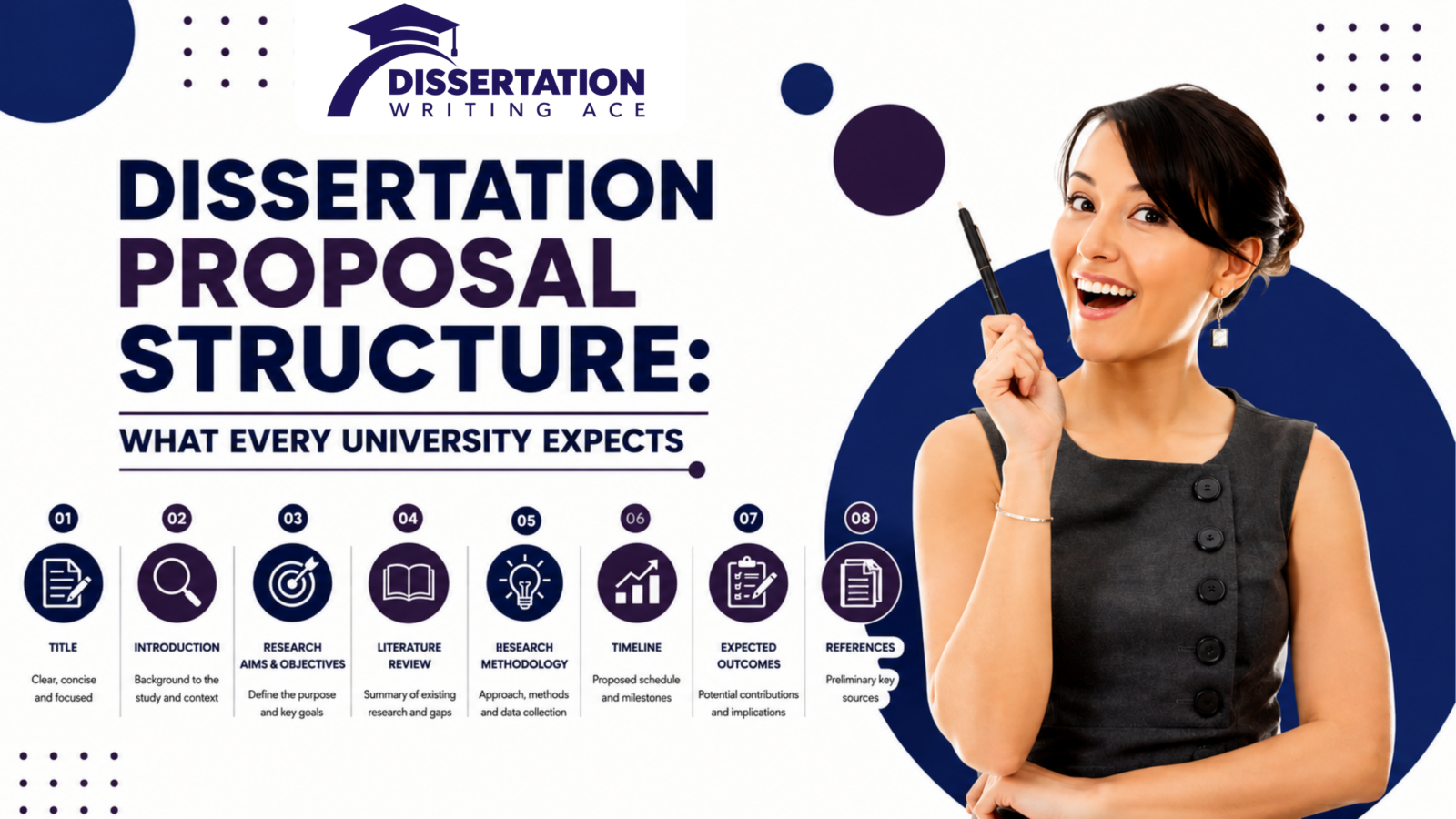
Use this scannable sample structure as a starting point. You can adapt these dissertation proposal sections directly for your own university project.
- Title: Provisional and highly specific.
- Background and Rationale: Why this matters right now.
- Aims and Objectives: One overarching aim and several measurable objectives.
- Mini Literature Review: Key themes and the identified academic gap.
- Methodology: Approach type and clear data justification.
- Timeline: A clear chart covering all major research stages.
- Ethical Considerations: Necessary participant safeguards.
- Expected Outcomes: Anticipated final contribution to the field.
- References: Full citation list in the required formatting style.
This structure provides an excellent foundation for any subject. You can view a complete sample dissertation proposal timeline for further structural guidance.
Word Count and Format Expectations
How Long Should a Proposal Be?
Proposals are typically between 500 and 3000 words. This depends entirely on whether you are at the undergraduate or doctoral level. Always confirm the exact limits within your specific department handbook.
The word count is usually not evenly distributed across the document. The background and methodology sections tend to carry the most academic weight.
Where Departments Differ
Different departments use highly varied terminology. Some ask for a rationale while others demand a background section. Some want a plan of work while others request a timeline.
The underlying expectation remains exactly the same. You must check the specific marking criteria before finalizing your research proposal structure. Finding a valid dissertation proposal example UK template from your specific faculty is highly recommended.
Frequently Asked Questions
A standard UK proposal requires several distinct sections.
Title and background rationale.
Aims and measurable objectives.
Mini literature review and methodology.
Project timeline and ethical considerations.
Expected outcomes and a reference list.
It typically ranges from 500 to 3000 words. You must check your specific department handbook for exact requirements.
No. You only need a mini review to identify the academic gap. A few focused paragraphs are usually sufficient.
Yes. Supervisors completely expect your ideas to evolve as you read more. Minor adjustments to your methodology are very common.
Most UK universities require the Harvard referencing style. However, law students use OSCOLA and psychology students typically use APA format. You must master how to write a dissertation proposal using the correct citation rules.
Conclusion
Our nine section guide acts as a highly reusable proposal template. It easily satisfies the underlying expectations of most UK university departments. It works perfectly regardless of any confusing local terminology.
A well structured proposal heavily speeds up your supervisor approval process. It also sets your final literature review and methodology chapters up in advance. If you are struggling with broad ideas, learn how to narrow a broad research interest into a question today.
Get your academic paperwork reviewed against your exact department requirements before submission. Our experts will guarantee your Dissertation Proposal Structure is completely flawless. We know exactly how to write a dissertation proposal that secures top marks.
Contact our professional writing team for expert research rationale support today. We can also provide a detailed guide on how to get ethical approval without delays for complex studies. Let us help you start your academic year with absolute confidence